Boat Insurance for Hawaii
Hawaii boat insurance for boaters who know the water.
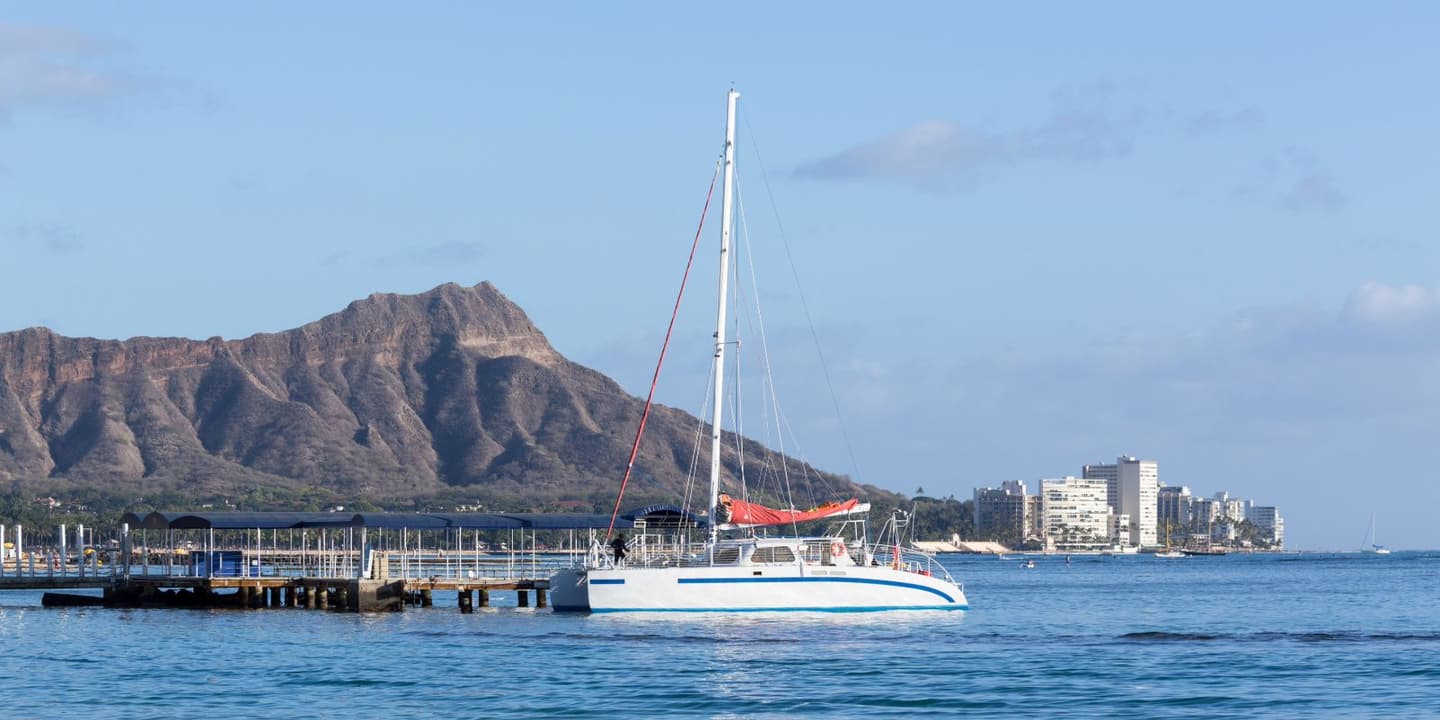
From Kāneʻohe Bay on Oʻahu to the waters off Maui, Roamly works with carriers who understand how Hawaii boaters actually boat.
Hawaii at a Glance
Requirement | Details |
|---|---|
Insurance requirement | Required for some boats: vessels originally built at 26 feet or longer, and smaller boats whose owners have previously owned a grounded vessel in Hawaii, need at least $100,000 in grounding and salvage coverage. Boats moored in state small boat harbors need liability coverage for their mooring permit. |
Boater education | Anyone operating a motorized vessel over 10 hp needs a boating safety course certificate, and operators under 16 need someone 21 or older aboard. Thrill craft (PWC) operators must be at least 15 and need a separate Hawaii thrill craft certification. |
Boating under the influence | Boating under the influence (0.08 BAC or higher) falls under Hawaii's DUI law, so a first offense brings a one-year to 18-month license revocation, including your driver's license, plus fines, community service, or jail. |
Registration | Boats register every year with the Division of Boating and Ocean Recreation, and undocumented boats principally used in Hawaii must be titled. As of October 2026, renewal is $20 a year for a boat under 20 feet or $35 for 20 feet and over. |
Requirements and regulations may change. Verify with the Hawaii Insurance Division and the Division of Boating and Ocean Recreation for the most current information.
What you need to know about Boat Insurance in Hawaii
Hawaii has a boat insurance mandate — it requires grounding and salvage coverage on larger boats and liability coverage in state harbors — and it treats boating under the influence as DUI, which can cost you your driver's license. Here's what actually shapes your policy.
Hawaii's Boat Insurance Rules
Hawaii requires at least $100,000 per occurrence in coverage for removing and salvaging a grounded vessel if your boat was originally built at 26 feet or longer, or if you've previously grounded a boat in Hawaii waters. If you keep your boat in a state small boat harbor, your mooring permit also requires boat liability coverage naming the state. We'll help you find coverage that meets those requirements and fits how you boat.
Agreed Value for Your Boat
Your center console with twin outboards, upgraded electronics, and a new T-top isn't a stock boat. Roamly works with carriers who may value the work you've put in, not some database guess.
Electronics and Gear Coverage
Chartplotters, radar, VHF radios, fishing rods, and dive gear add up fast. Roamly works with carriers who may offer coverage options for marine electronics and the personal gear you bring aboard.
Coverage Lenders and Marinas Ask For
If you finance your boat, your lender will likely require coverage for the boat itself, and state small boat harbors require liability coverage before they'll issue or renew your mooring permit. Roamly works with carriers who may help you meet those requirements, and we'll help you get the paperwork in order.
Protection Beyond Basics
Type | Details |
|---|---|
Mechanical Breakdown Coverage | Engines fail at the worst times — like out in the channel between islands with the trade winds building. Through Roamly's carrier partners, coverage may be available to help with sudden mechanical breakdowns beyond warranty. |
Guest Medical Coverage | Sandbar days at Kāneʻohe Bay mean friends and family aboard and plenty of time in and out of the water. Roamly works with carriers who may offer medical payments options for guests hurt on your boat. |
Docking Mishaps | Ocean surge and crowded small boat harbors lead to bumps and scrapes. Through Roamly's carrier partners, coverage may be available for damage from docking mishaps. |
Protect the Gear You Bring Aboard
A day fishing off Oʻahu or a snorkel trip off Maui means a lot of gear on board — rods and reels, dive and snorkel gear, coolers, and electronics at the helm. Many basic policies limit coverage for personal property, so check yours before your next trip. Roamly works with carriers who may offer coverage options for marine electronics and personal effects like fishing and water sports equipment, which may help you replace what's lost or damaged.
What Hawaii Actually Requires
Hawaii requires grounding and salvage insurance on larger boats and liability coverage for boats in state harbors. Boats originally built at 26 feet or longer, and smaller boats whose owners have previously owned a grounded vessel in Hawaii, need at least $100,000 per occurrence in coverage for salvage and removal. The state also requires a boating safety course certificate for anyone operating a motorized vessel over 10 hp; a separate certification for thrill craft operators; annual registration and titling with the Division of Boating and Ocean Recreation; and a life jacket on every child 12 and under. Accidents involving a death, a disappearance, an injury beyond first aid, or more than $2,000 in damage must be reported in writing within 48 hours. Required coverage helps pay for salvage, wreck removal, and damage to others, but it doesn't pay to repair or replace your own boat. We'll help you figure out what makes sense for your situation.
Real Value for Upgraded Boats
You set up your boat the way you wanted it: twin outboards, upgraded electronics, a new T-top, and a better trailer. Book value doesn't account for the upgrades you've added. Roamly works with carriers who offer Agreed Value coverage options — we'll help document your boat so it may be insured for an agreed amount that reflects your upgrades, which may help if you ever need to file a claim.
LEGAL DISCLAIMERS
Roamly is a licensed insurance agency. Insurance policies referenced are offered through Roamly and underwritten by third-party carriers including Progressive, National General, Foremost, Liberty Mutual, American Modern, Ahoy Insurance, and Spinnaker Insurance Company, among others. Not all products or coverages are available in every state. Coverage terms, conditions, limits, deductibles, exclusions, and availability vary by state, carrier, and policy. This page is provided for general information and is not a contract of insurance. See the actual policy for a full description of coverages, terms, and conditions. Hawaii law references current as of October 2026 — confirm current requirements with the Hawaii Insurance Division and the Hawaii Department of Land and Natural Resources Division of Boating and Ocean Recreation.
Why Roamly?
True replacement value
Your boat isn't just worth the Blue Book numbers. We'll find you a policy that insures it for what it's actually worth – including your upgraded electronics.
Real-world coverage
From shallow water prop strikes to dock collisions, we cover the stuff that actually happens to recreational boaters.
Insurance by boaters, for boaters
Our marine specialists actually spend their weekends on the water. They speak your language because they boat too.
For some boats, yes. If your boat was originally built at 26 feet or longer, or you've previously grounded a boat in Hawaii waters, state law requires at least $100,000 per occurrence in coverage for removing and salvaging a grounded vessel. Boats moored in state small boat harbors also need boat liability coverage, naming the state, to keep their mooring permit. Requirements may change — verify with the Hawaii Insurance Division and the Division of Boating and Ocean Recreation.
Yes, if you operate a motorized vessel over 10 horsepower. Since November 10, 2014, operators need a certificate from a NASBLA- and state-approved boating safety course, and your card or certificate must carry the DLNR "Course Approved for State of Hawaiʻi" stamp. Operators under 16 must have someone 21 or older aboard supervising them. Thrill craft operators must be at least 15 and need a separate Hawaii thrill craft certification, and renters can operate after a safety briefing from the rental business.
It depends on your boat's type, size, value, and horsepower, where you keep and use it, your boating experience, and the coverage you pick. Whether you keep it in a state small boat harbor or on a trailer, how far offshore you run, and adding physical damage coverage or coverage for electronics and gear will change the price. Get a personalized quote to find out your rate.
Roamly is a brokerage — we work with carriers who may offer coverage options for marine electronics like chartplotters and radar, plus personal effects like fishing gear and water sports equipment. Limits and eligibility depend on the carrier, so it's worth asking before you buy. Coverage terms, conditions, and availability vary by state and policy.
Roamly works with carriers who offer Agreed Value coverage options. We may help document your boat and its upgrades up front so it can be insured for an agreed amount, not a depreciated book value. If it's totaled, the agreed value — less any deductible — is what the policy is built around. Coverage terms, conditions, and availability vary by state and policy.
Hawaii doesn't require general liability or physical damage coverage for most boats, but boats originally built at 26 feet or longer need grounding and salvage coverage, and boats in state harbors need liability coverage. Liability pays for damage you cause to other people and their property — another boat, a dock, or someone hurt in a collision. "Full coverage" usually means adding physical damage coverage, which helps pay to repair or replace your own boat after a collision, theft, vandalism, or storm damage. If you're financing, your lender will likely require it.
Hawaii treats boating under the influence the same as DUI, with a 0.08 BAC limit. A first offense brings a one-year to 18-month revocation of your license to operate a vehicle — including your driver's license — a substance abuse program, and one or more of 72 hours of community service, 48 hours to five days in jail, or a $250 to $1,000 fine. Anyone operating a vessel is deemed to have consented to testing. If a violation is on your record, Roamly works with carriers that may still be able to help you find coverage. Coverage terms, conditions, and availability vary by state and policy.
It can. Hawaii bans credit-based rating for auto insurance, but that ban doesn't extend to boat policies, so it's worth asking each carrier how it rates. Your boating experience, your boat, and where you keep it are also major rating factors, and how much each one counts varies by carrier.
It covers removing and salvaging your boat if it runs aground. Since 2019, owners of boats originally built at 26 feet or longer, and owners who have previously grounded a boat in Hawaii waters, must carry at least $100,000 per occurrence for that cost. Hurricane season starts June 1, and the Division of Boating and Ocean Recreation publishes harbor closure procedures for hurricanes and tsunamis, so it's worth planning ahead for your boat.
Still have questions?
Call us at 877.725.1245
Hawaii Boat Insurance Quotes in Minutes
Hawaii boat insurance for boaters who know the water.
* Roamly is an insurance agency, not a carrier. Coverage, limits, and availability vary by carrier and by state, and are subject to underwriting approval.

Roamly Insurance Group, LLC ("Roamly") is a licensed general agent for affiliated and non-affiliated insurance companies. Roamly is licensed as an agency in all states in which products are offered. Roamly license numbers. Availability and qualification for coverage, terms, rates, and discounts may vary by jurisdiction. We do not in any way imply that the materials on the site or products are available in jurisdictions in which we are not licensed to do business or that we are soliciting business in any such jurisdiction. Coverage under your insurance policy is subject to the terms and conditions of that policy and is ultimately the decision of the buyer.
Policies provided by Roamly are underwritten by Spinnaker Insurance Company, Progressive Insurance Company, Liberty Mutual Insurance Company, Foremost Insurance Company, National General Insurance, and others.
© 2026 Roamly All rights reserved.