Jan 19, 2022
The best travel trailers for cold weather in 2026
The best travel trailers for cold weather in 2026
A
By Aaron Ammar
Stay nice and warm with an RV equipped with good insulation and a powerful furnace. Here are our top picks for the 10 best trailers for cold weather.
Common questions
Blog Post
Education

The best travel trailers for cold weather combine superior insulation, heated enclosed underbellies, and powerful furnaces (25,000-35,000 BTU) to handle sub-freezing temperatures.
Top four-season models have great insulation and include Northwood Arctic Fox (triple insulation system), Jayco Eagle HT with Climate Shield technology, Lance trailers with all-weather packages, and Oliver Travel Trailers featuring double-hull fiberglass construction.
The key features to look for include foam-board insulation (R-6+ rating), dual-pane thermal windows, PEX plumbing systems, and heated tank pads. These winter-ready rigs prevent pipe freezing, maintain comfortable temperatures in below-zero conditions, and protect your investment during four-season adventures.
Which Travel Trailer Brands Excel in Cold Weather?
Quality four-season trailers feature specialized construction, including R-10+ insulation, 25,000+ BTU furnaces, heated underbellies, dual-pane windows, and PEX plumbing systems designed specifically for sub-freezing temperatures.
Let's break down the 10 heavy hitters that have earned their reputation in freezing temps:
Northwood Arctic Fox: The Gold Standard
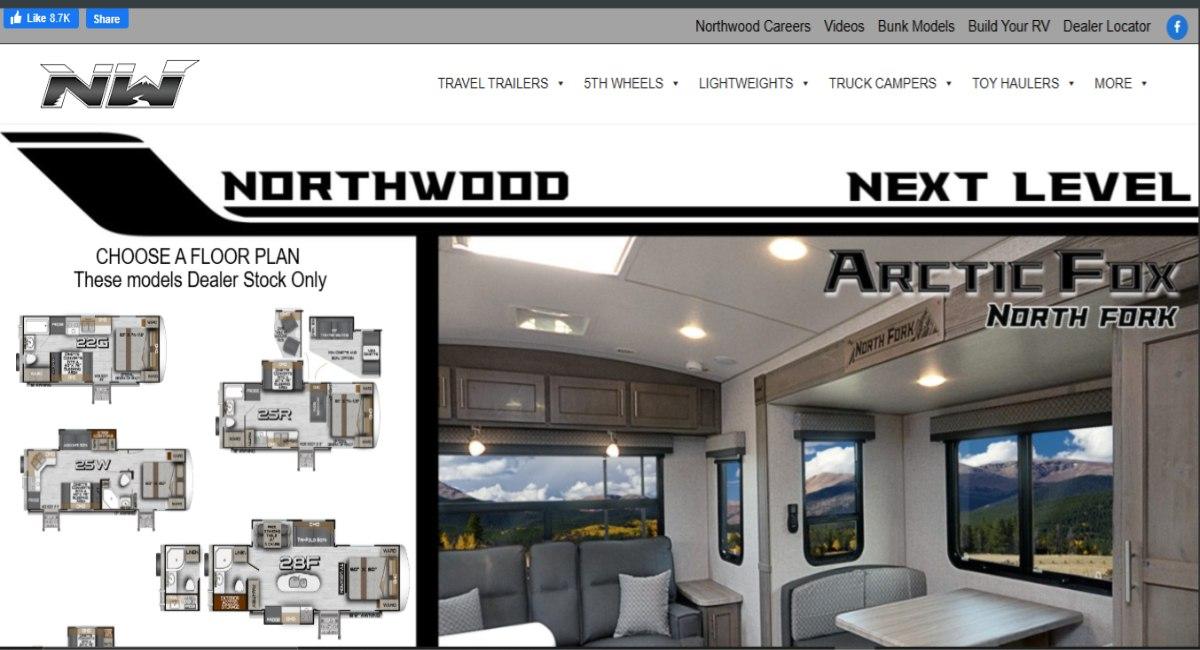
Arctic Fox trailers feature heavy-gauge aluminum construction with triple-threat insulation and water tanks contained inside the body, surrounded by warm air to prevent freezing. Their 30,000 BTU furnace provides serious heat output, and the enclosed underbelly keeps everything protected.
Key features: R-value 10+, 30,000 BTU furnace, enclosed heated underbelly, weight range 7,000-12,000 lbs.
The Good
- Premium four-season performance with industry-leading R-values
- The triple insulation system works in both extreme cold and heat
- Water tanks inside the heated space eliminate freezing concerns
- Thoughtful design throughout makes it a true year-round rig
The Not-So-Good
- Heavy construction requires a 3/4-ton or 1-ton truck for towing
- Premium pricing ranges $65,000-$95,000+
- Not suitable for weekend warriors with half-ton trucks
Jayco Eagle HT with Climate Shield
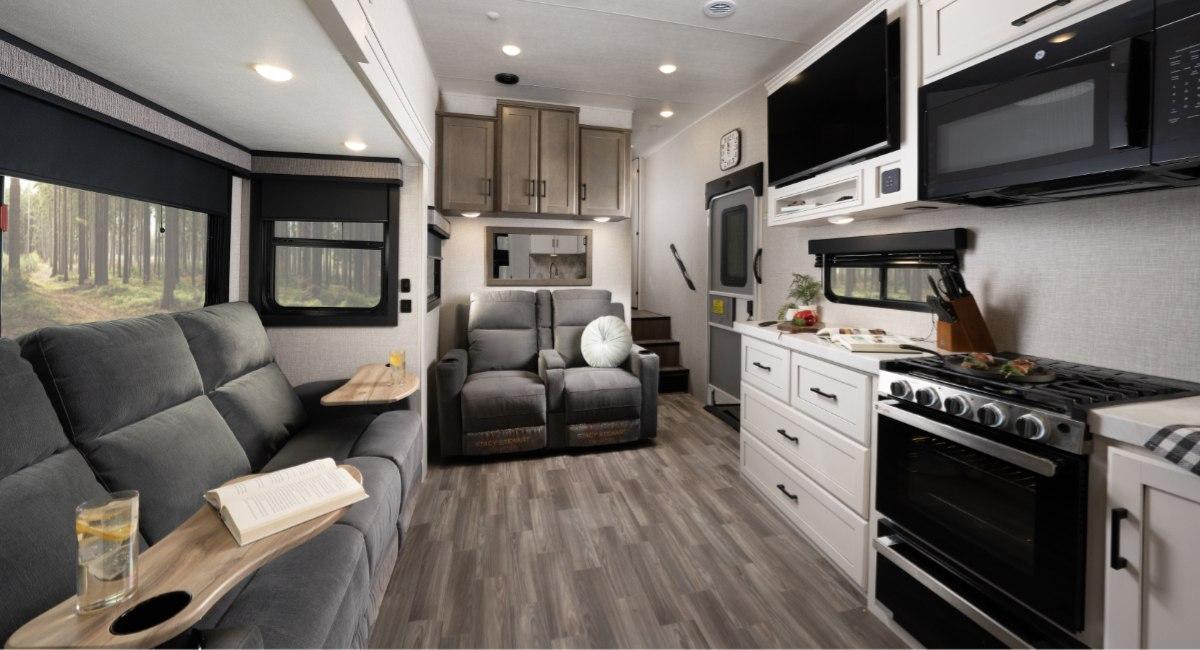
Image credit: Jayco Eagle HT
The Eagle HT's Climate Shield protection package is rated for temperatures down to 0 degrees, featuring fully enclosed underbellies with ducted heating, double-layer fiberglass batt insulation, and upgraded 35,000-BTU propane furnaces. It is arguably the best-equipped travel trailer in Jayco's entire lineup.
Key features: PEX-tested water lines, reflective radiant barrier insulation, and 5K BTU electric fireplace options.
The Good
- The Climate Shield package provides legitimate zero-degree protection
- Comprehensive heating with a 35,000 BTU furnace handles serious cold
- Multiple floor plans suit couples to families
- PEX water lines resist freeze damage better than traditional plumbing
The Not-So-Good
- Climate Shield is an optional upgrade package
- Price ranges $50,000-$70,000, mid-premium category
- A ducted heating system can be noisy during continuous operation
Lance All-Weather Package
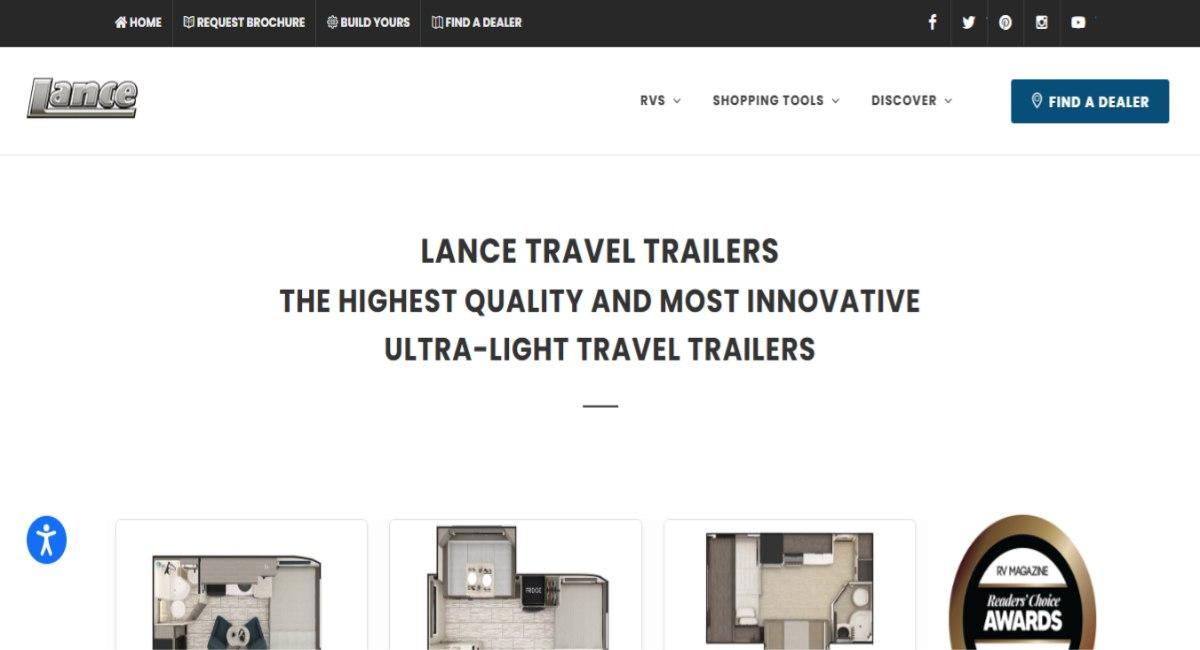
Lance trailers feature heating ducts that evenly distribute hot air throughout your space, with one duct flowing directly to water holding tanks to prevent freezing. Their all-weather package includes dual-pane windows and easy-drain valves for quick winterization. Lance has built their reputation on quality construction and winter capability.
Key features: Azdel wall construction, insulated hatch covers, ducted heating to tanks, compact sizes ideal for easier towing.
The Good
- True four-season capability in more compact, towable packages
- All-weather package is well-engineered and proven
- Azdel construction prevents mold and rot in wet conditions
- Generally lighter weight than competitors in the same class
The Not-So-Good
- Four-seasons certification is optional, not standard
- Pricing ranges from $55,000 to $75,000 for equipped models
- Some floor plans sacrifice living space for better insulation
Oliver Travel Trailers
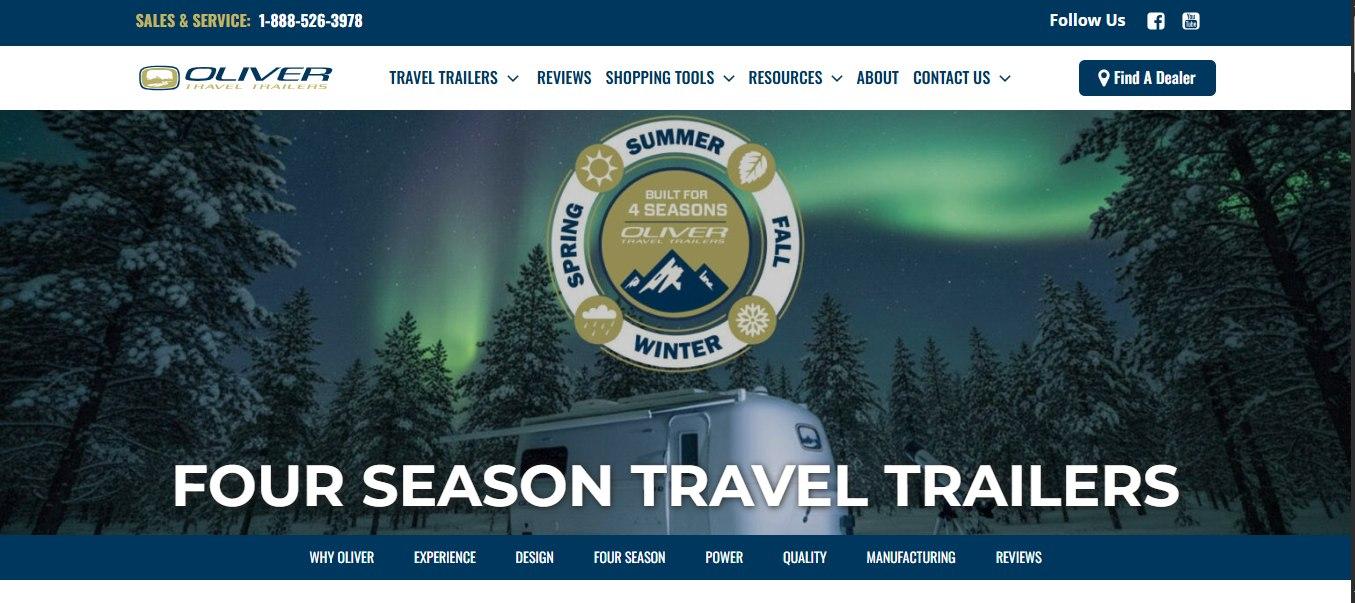
Oliver's unique double-hulled fiberglass construction provides superior insulation, while enclosed plumbing systems resist freezing, and dual-pane windows enhance temperature control. Several owners report reliable comfort in blizzards, heatwaves, and sub-zero conditions.
Key features: Molded fiberglass body (no wood to rot), all plumbing and tanks in heated space, compact 17-23 foot sizes.
The Good
- Double-hull fiberglass construction is nearly bulletproof for all-weather use.
- No wood means no rot, mold, or delamination issues
- Excellent resale value due to durability and reputation
- All systems contained in a heated space eliminate most freeze concerns
The Not-So-Good
- Limited size options max out at 23 feet
- Can feel tight for full-time living or families
- Premium pricing ranges $85,000-$120,000
Outdoors RV Back Country Series
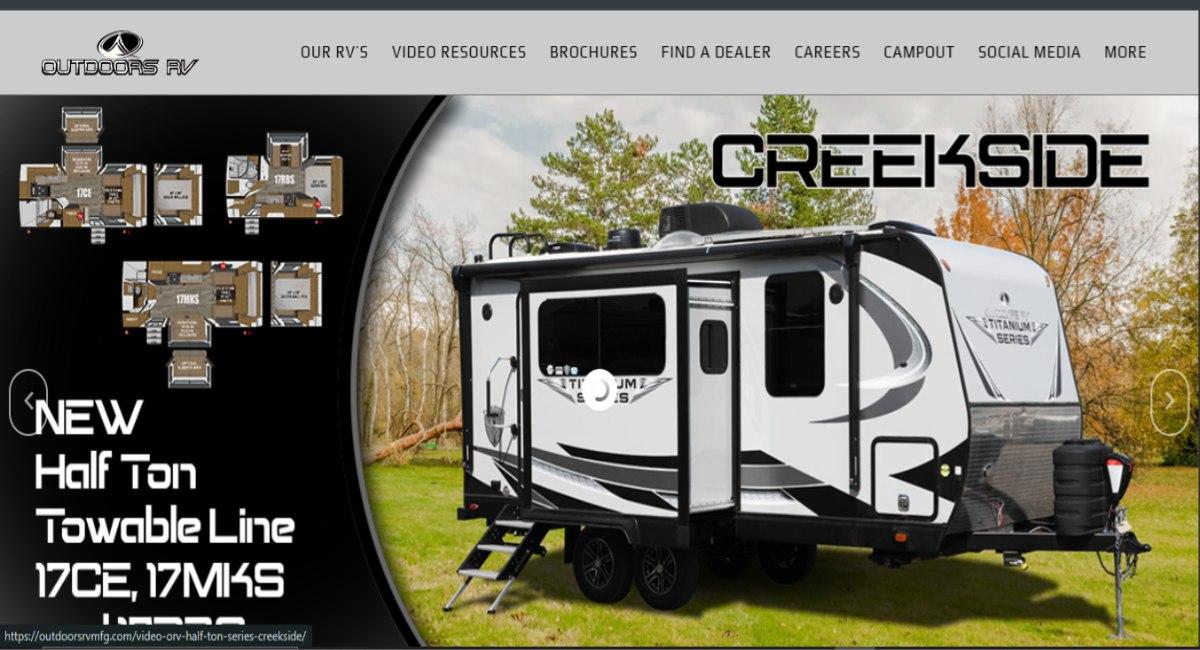
Outdoors RV specializes in heavy-duty travel trailers built to withstand any weather or elements. Their Back Country series features a Climate-Designed Four Seasons package with triple-layered roof insulation (R-15), XL furnaces, and a unique heated, insulated holding-tank design. Outdoors RV is a top choice for extreme conditions.
Key features: R-15 floor insulation, thermostatically controlled tank heaters, nitrogen-filled euro-style acrylic thermal-pane windows.
The Good
- Built specifically for extreme Pacific Northwest and Alaska conditions
- True R-15+ insulation throughout beats most competitors
- Nitrogen-filled acrylic windows have higher R-values than dual-pane glass
- Excellent for boondocking with robust solar options
The Not-So-Good
- Heavy construction requires serious towing capacity
- Rugged off-road focus means fewer luxury amenities
- Some floor plans prioritize function over style
Keystone Cougar with Climate Guard
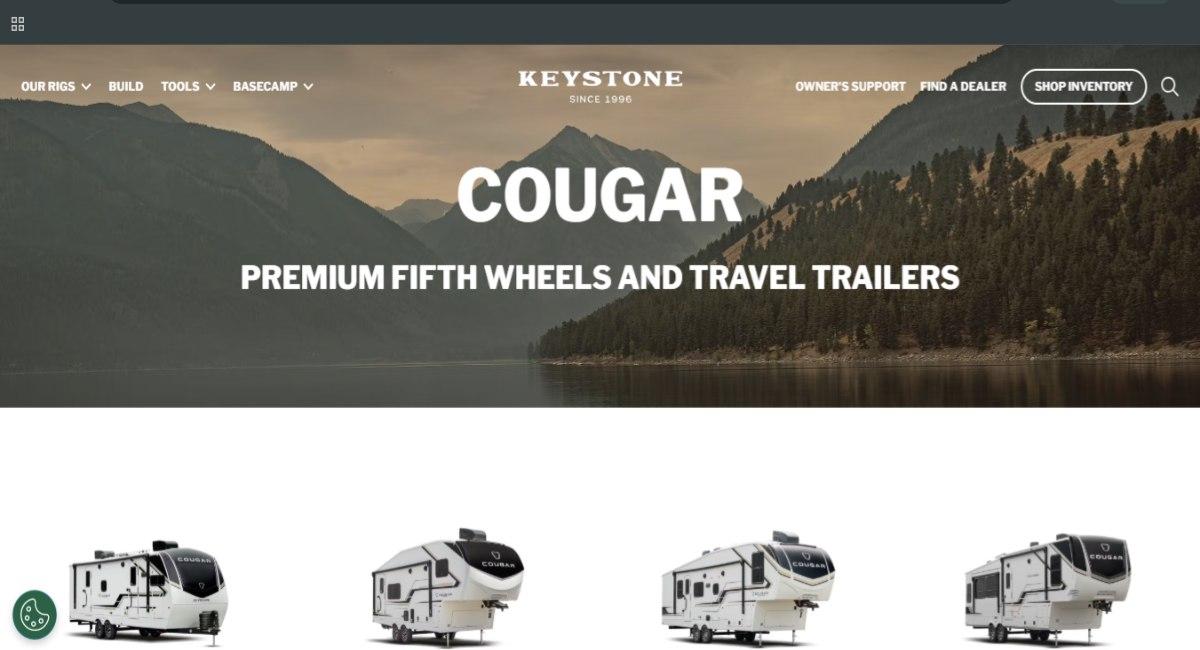
Keystone Cougar's Climate Guard package ensures protection from 0 to 110 degrees, featuring a fully enclosed, insulated, and heated underbelly with reflective insulation throughout. It also has a zero-degree certification and a warranty that covers full-time use.
Key features: 1-inch thick thermal insulated luggage doors, triple-layered roof insulation, and multiple floor plan options.
The Good
- More affordable entry into four-season camping at $45,000-$60,000
- Wide variety of floor plans for different needs
- The Climate Guard package is well-tested and proven
- Good warranty coverage, including full-time use
The Not-So-Good
- Climate Guard is optional; you must verify it's included
- Build quality can vary depending on the model year
- May need supplemental heating in extreme conditions
Palomino Puma with Extended Season Package
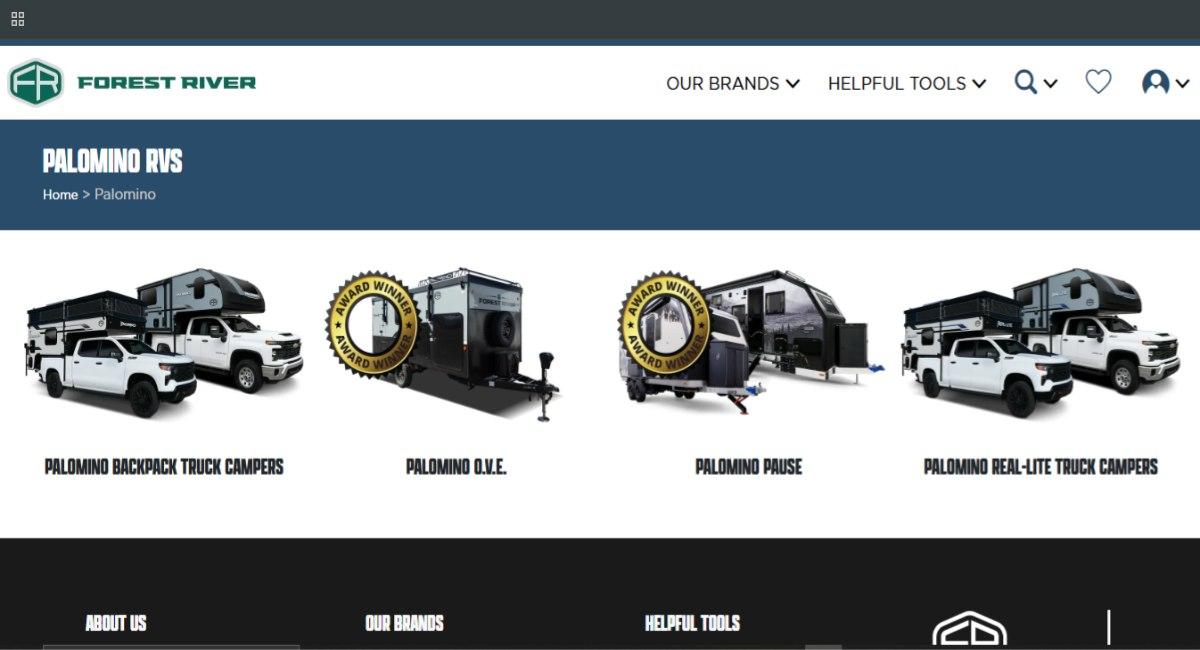
Palomino Puma trailers with the Extended Season Package offer thermopane windows, R-7 sidewall insulation, R-12 floor insulation, R-14 ceiling insulation, and Azdel sidewall construction. The Puma provides solid four-season capability at a more accessible price point.
Key features: Enclosed foil-insulated underbelly, heated holding tanks, and good build quality for the price.
The Good
- One of the most affordable true four-season options at $40,000-$55,000
- Good R-values throughout the trailer (R-7 walls, R-12 floor, R-14 ceiling)
- Azdel construction prevents moisture issues
- Lighter weight than many competitors
The Not-So-Good
- The Extended Season Package must be specified when ordering
- Furnace capacity can be marginal in extremely cold conditions
- Build quality is good, but not at a premium level
Grand Design Imagine with Four-Season Package
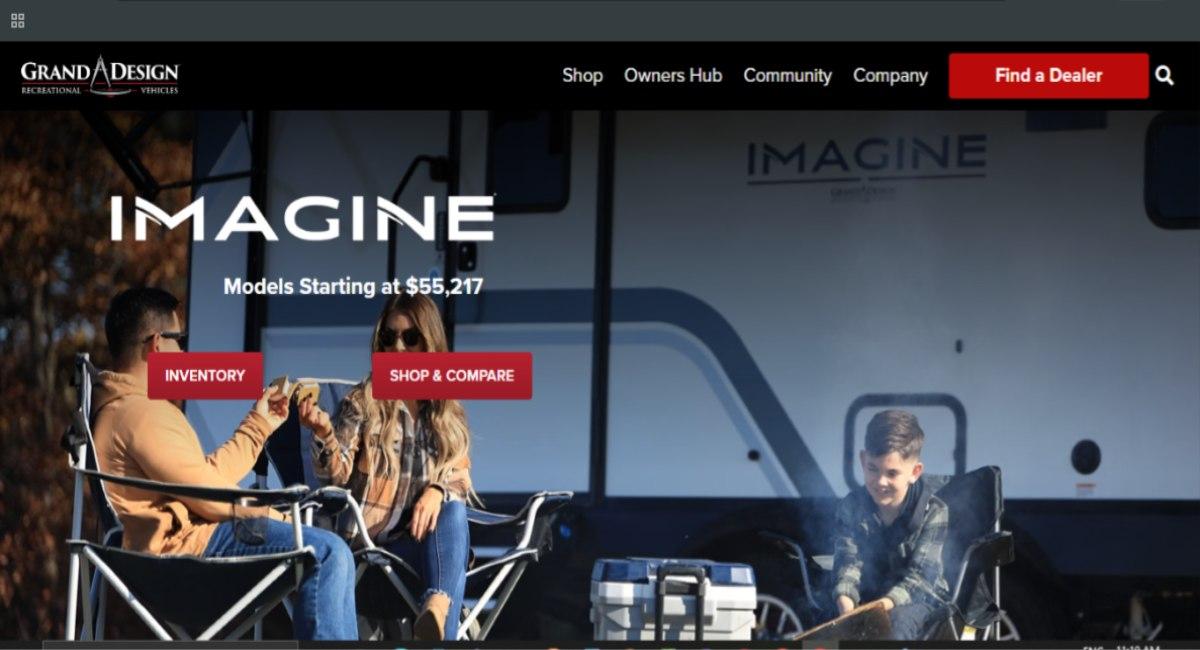
Grand Design Imagine trailers feature quality construction with optional four-season packages. The newer Imagine models have addressed previous shortcomings with excellent fit and finish.
Key features: Enclosed heated underbelly, good insulation, thoughtful interior design, strong warranty support.
The Good
- Grand Design has earned a strong reputation for quality and customer service
- Well-insulated with good factory options
- Excellent warranty support stands behind the product
- Thoughtful interior design and fit/finish
The Not-So-Good
- Four-season capability varies by model and package
- Not all Imagine models are equally equipped for extreme cold
- Optional packages can add significantly to the base price
East to West Alta Xtreme
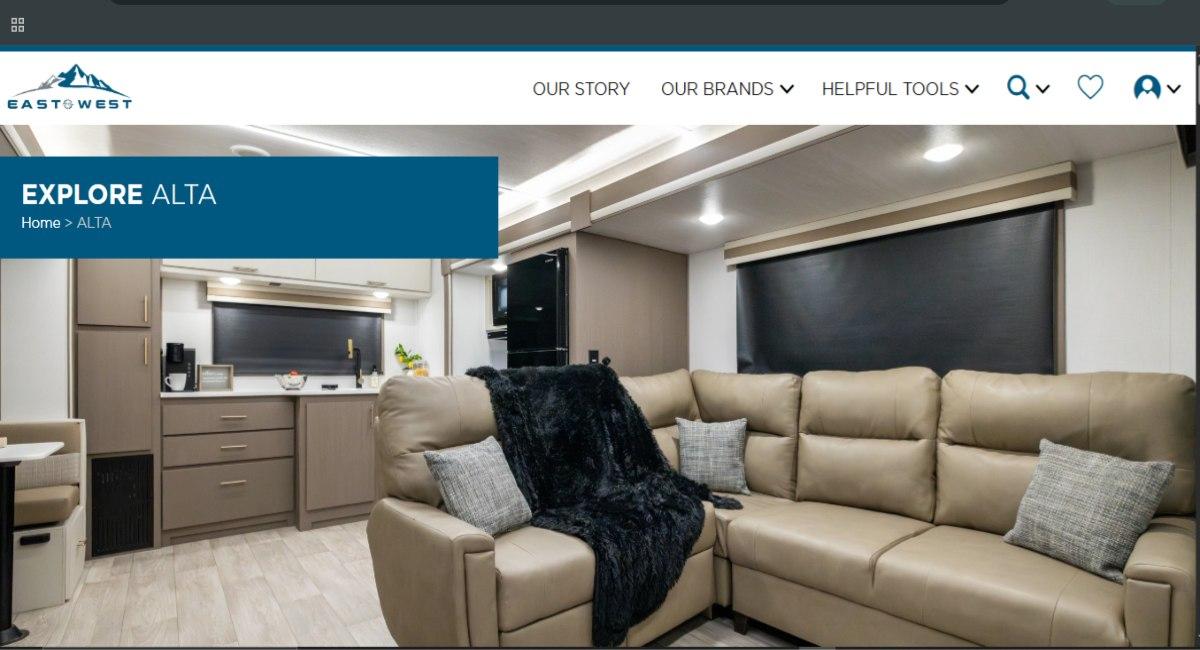
East to West's Alta Xtreme models offer upgraded four-season features, including three-inch laminated sidewalls with an Azdel finish, a nearly 20-cubic-foot, double-door 12V refrigerator, and a 96-inch interior ceiling height. It has a power package with a 400-watt solar panel that appeals to boondockers.
Key features: Taller interior ceilings, robust electrical system, good storage, mid-range pricing.
The Good
- Three-inch wall construction provides excellent insulation
- Tall 96-inch ceilings make the interior feel more spacious
- Solar and electrical options suit off-grid camping
- Pricing around $45,000-$65,000 is reasonable for features
The Not-So-Good
- Alta Xtreme is a specific model line; standard Alta trailers differ
- The brand is less well-known than its competitors
- It can affect resale value compared to major brands
Imperial Outdoors X-Series
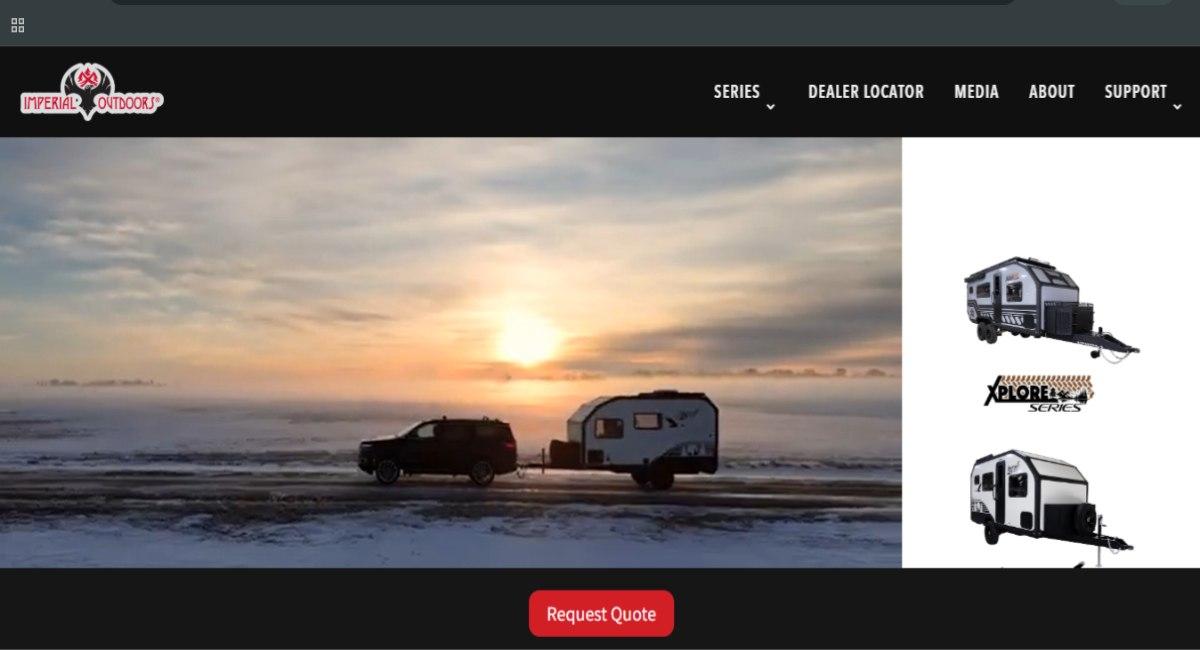
Imperial Outdoors was born out of an ice fishing house manufacturer, so they know cold weather. Their X145 and X195 models claim four-season capability to -40 degrees Fahrenheit with extreme insulation, heated systems, and compact designs.
Key features: R-18.5 walls, R-15 floor and roof, 20,400 BTU Truma Combi furnace, nitrogen-filled acrylic windows, compact 21-22 foot lengths.
The Good
- Legitimate -40 degree capability is unmatched in the industry
- An ice fishing house heritage means a deep understanding of extreme cold
- Compact sizes (21-22 feet) are easier to tow and heat efficiently
- Build quality is exceptional for winter camping
The Not-So-Good
- Premium pricing, typically $110,000-$143,000, makes these very expensive
- Limited size options don't suit larger families
- A compact layout may feel cramped for full-time living
What Makes a Travel Trailer Truly Cold-Weather Ready?
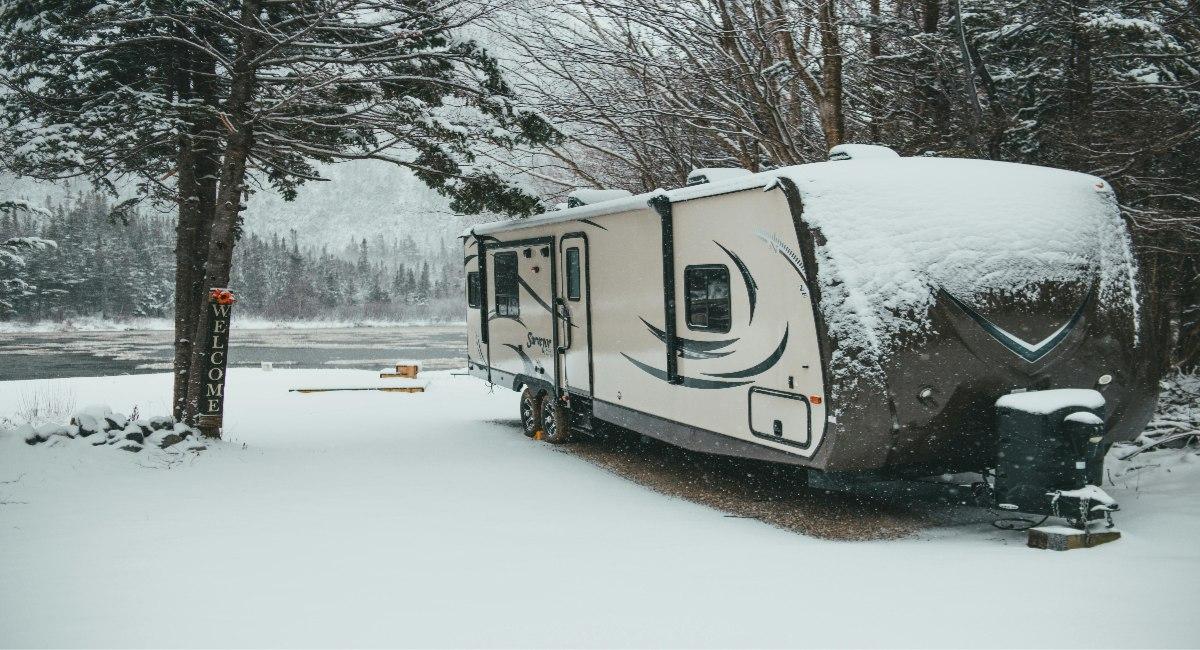
Image credit: Pexels
Four-season travel trailers use expanded polystyrene (EPS) foam block insulation with R-values of 10 or more, plus heated underbellies to protect plumbing systems from freezing.
Not all "cold weather packages" are created equal. Here's what separates genuine four-season rigs from marketing fluff. Understanding these differences is crucial, especially since RV insurance coverage varies significantly by trailer class and features.
Superior Insulation Systems
The best cold-weather trailers don't rely on a single insulation type. Arctic Fox leads with a triple-threat combination: fiberglass insulation, rigid foam boards, and reflective foil insulation. This layered approach delivers R-values exceeding 10, compared to standard RVs that typically max out around R-4.
Manufacturers like Keystone utilize AstroFoil in their "Polar Pack" all-season protection packages, while others incorporate Azdel Onboard composite materials laminated with high-density foam.
Heated and Enclosed Underbellies
This feature separates weekend warriors from true winter campers. Enclosed underbellies with ducted heating systems force warm air around plumbing and holding tanks, preventing freeze damage that can cost thousands in repairs.
Some manufacturers use heated tank pads instead of ducted systems. These 12-volt heated pads attach directly to each tank and work alongside enclosed termination systems to combat cold-weather concerns. For comprehensive freeze prevention strategies beyond just trailer selection, see our detailed guide on how to keep RV pipes from freezing.
Furnace Capacity that Actually Works
A general rule: you need about 1,000 BTU per foot of RV length for adequate heating in cold conditions. That means a 30-foot trailer should have at least a 30,000 BTU furnace, not the 18,000 BTU units some manufacturers try to pass off as "adequate."
After exploring mountains in below-freezing temps, trust us—you don't want to find out your furnace is undersized at 2 AM when it's 10 degrees outside.
Ready for winter miles? Get a fast RV insurance quote from Roamly and protect your cold-weather adventures before you hit the road.
How Much Furnace Power Do You Really Need?
For cold weather camping in sub-freezing temperatures, plan for 30,000+ BTU furnaces in trailers 30 feet and longer, with 18,000-25,000 BTU units sufficient for smaller rigs under 25 feet.
The BTU debate gets heated (pun intended) in RV forums, but here's the real-world breakdown:
Furnace Sizing Guidelines
- Under 25 feet: 18,000-25,000 BTU minimum
- 25-30 feet: 30,000 BTU recommended
- Over 30 feet: 35,000+ BTU for serious cold weather
Smaller furnaces may run continuously in extreme cold, which actually helps prevent pipe freezing by maintaining consistent airflow to the underbelly. However, undersized units struggle to maintain comfortable interior temperatures when it's really cold.
Beyond BTUs: Distribution Matters
Raw BTU numbers only tell part of the story. Lance's ducted systems excel because they distribute heat more evenly throughout the space and direct warm air to crucial areas like water tanks.
Propane Consumption Reality Check
A 30,000 BTU furnace running full-blast consumes about 1 gallon of propane every 3-4 hours. In moderate cold, expect 6-10 hours per gallon as the furnace cycles on and off.
What Insulation Types Actually Work in Extreme Cold?
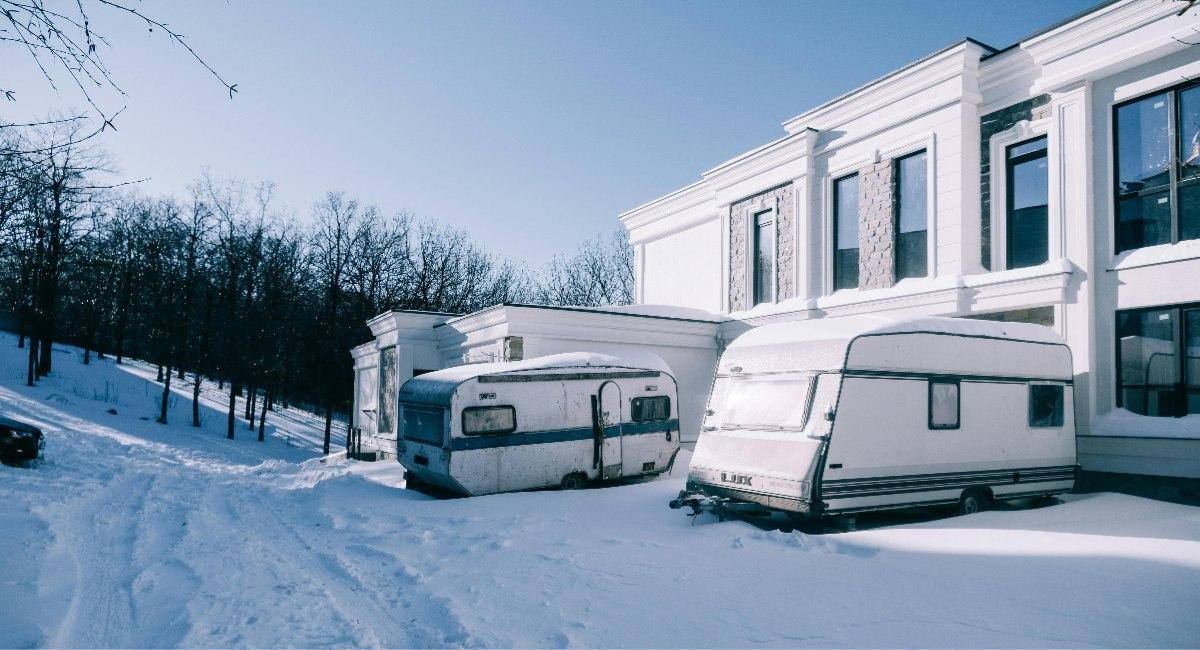
Image credit: Pexels
Expanded polystyrene (EPS) foam block insulation delivers R-6 ratings and stability, while combination systems using laminated fiberglass and reflective barriers achieve R-values of 10+.
Let's cut through the insulation marketing speak and focus on what keeps you warm:
EPS Foam Block: The Winter Warrior
Four-season trailers typically use expanded polystyrene (EPS) foam blocks with R-6 ratings that remain stable over time. Unlike cheaper alternatives, EPS won't compress, settle, or grow mold in humid conditions.
Combination Systems: Best of All Worlds
Arctic Fox's approach combines fiberglass insulation, rigid foam boards, and reflective foil insulation to create a thermal barrier that works in both hot and cold conditions.
Thermal Bridging: The Hidden Enemy
Standard RV construction creates thermal bridges—areas where metal framing conducts cold directly through the wall. Quality four-season rigs address this with thermal breaks and continuous insulation layers.
Window Technology Matters
Dual-pane thermal windows reduce heat loss significantly compared to single-pane RV windows, while some manufacturers include Low-E coatings for additional thermal performance.
Do Heated Tank Systems Actually Prevent Freezing?
Heated tank systems using 12-volt pads attached directly to tanks, combined with enclosed underbellies, effectively prevent freeze damage in temperatures well below zero.
We've tested these systems in real-world conditions, and here's what actually works:
Ducted Heat vs. Tank Pads
Ducted systems blow warm furnace air into the underbelly compartment.
Pros: Uses existing furnace heat, warms the entire underbelly. Cons: Only works when the furnace runs.
Electric tank pads provide dedicated 12-volt heating directly to tanks. These pads attach directly to each tank and work independently of the furnace system.
Pros: Consistent heating, works even when the furnace cycles off. Cons: Draws battery power.
The Enclosure Factor
Fully enclosed underbellies are crucial—they trap warm air and prevent wind chill from robbing heat from tanks and plumbing. Partial enclosures or simple belly wraps don't cut it in serious cold.
PEX Plumbing Advantage
PEX water lines resist freeze damage because the material can expand when water freezes, then return to its original size when thawed, unlike rigid PVC, which cracks.
How Do These Trailers Handle Real Winter Conditions?
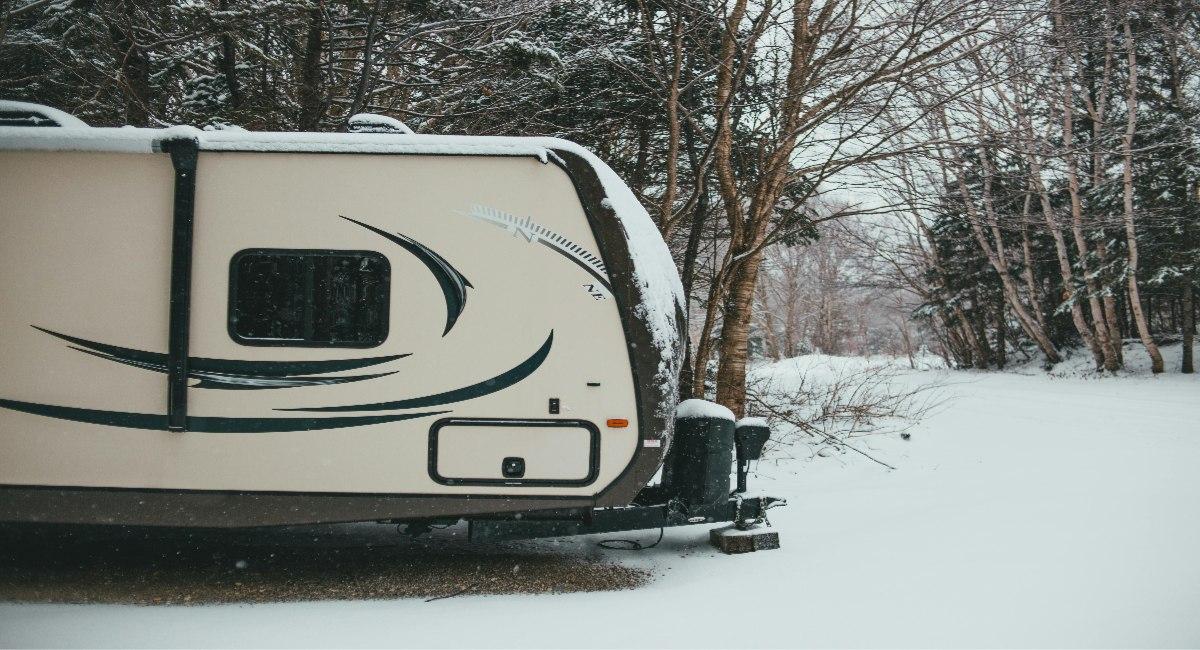
Image credit: Pexels
Well-insulated trailers with proper heating systems maintain comfortable 65°F interiors even in -20°F conditions, with furnaces cycling just once per hour in extreme cold.
Here's what you can expect from top-tier four-season trailers in actual winter camping scenarios:
Temperature Performance
Custom campers with quality insulation and right-sized heating can maintain standard 65°F temperatures in nearly 20-below-zero conditions, with furnaces cycling only once every hour or so for a few minutes at a time.
Energy Efficiency in Practice
The RV insurance market growth of 2.63% CAGR reflects increasing adoption of four-season RVs as more people embrace year-round camping lifestyles. According to the RV Industry Association, 78% of RVers say having an RV cold-weather equipped is important, supporting the growing trend of winter camping. These trailers prove their worth by allowing comfortable camping in previously impossible conditions.
Real-World Durability
Four-season construction means these rigs handle freeze-thaw cycles without the typical RV problems: frozen pipes, cracked tanks, or condensation issues that plague standard trailers.
What Should You Budget for a Quality Four-Season Trailer?
Quality four-season construction commands premium pricing, but prevents costly freeze damage and extends your camping season significantly.
Price Ranges by Brand
- Arctic Fox: $65,000-$95,000+ (premium pricing for premium performance)
- Lance with all-weather package: $55,000-$75,000
- Jayco Eagle HT: $50,000-$70,000
- Oliver Travel Trailers: $85,000-$120,000 (luxury compact market)
- Outdoors RV: $70,000-$95,000+
- Keystone Cougar: $45,000-$60,000 (value option)
- Palomino Puma: $40,000-$55,000 (entry-level four-season)
- Imperial Outdoors: $110,000-$143,000 (extreme cold specialist)
Insurance Considerations
Travel trailer insurance averages $594 annually, with premium models potentially costing $800-1,200 yearly due to higher values and specialized equipment. For those considering full-time living in their four-season rig, understanding the complete cost breakdown helps with budgeting decisions.
Value Proposition
Consider the cost of freeze damage: burst water lines, cracked tanks, and delamination from ice damage can easily exceed $10,000-15,000 in repairs. Quality four-season construction prevents these expensive failures.
Get Your Four-Season Rig on the Road
Don't let cold weather limit your camping season. These proven four-season trailers open up incredible winter destinations most RVers never experience, from snow-covered national parks to cozy mountain valleys.
Protect your cold-weather adventures with a fast, no-obligation RV insurance quote from Roamly before you hit the road. Get rolling with Roamly Insurance.
Insurance terms, coverage, and discounts vary by jurisdiction; consult a licensed agent.
Use a properly sized furnace (1,000 BTU per foot of length), add skirting to block wind, seal air leaks, insulate windows, and run the furnace consistently rather than cycling it on and off.
To keep your travel trailer from freezing, do the following:
- Run your furnace continuously
- Add RV skirting
- Use heated water hoses
- Insulate windows with reflective covers, and
- Keep cabinet doors open to circulate warm air around plumbing.
Arctic Fox, Oliver Legacy Elite, and Outdoors RV offer the best full-time living features. They feature superior insulation, robust heating systems, quality construction, and proven durability in extreme conditions year-round.
Yes, true four-season campers feature R-10+ insulation, heated enclosed underbellies, dual-pane windows, PEX plumbing, and furnaces rated for sub-zero temperatures. You should verify these specs before buying.
Standard trailers struggle to operate below 32°F, while four-season trailers with proper insulation (R-10+), heated underbellies, and 30,000+ BTU furnaces can operate down to -40°F.
The 10 trailers covered in this guide all excel in cold weather. Arctic Fox and Imperial Outdoors offer the most extreme cold capability. Keystone Cougar and Palomino Puma provide budget-friendly four-season options.

Roamly Insurance Group, LLC ("Roamly") is a licensed general agent for affiliated and non-affiliated insurance companies. Roamly is licensed as an agency in all states in which products are offered. Roamly license numbers. Availability and qualification for coverage, terms, rates, and discounts may vary by jurisdiction. We do not in any way imply that the materials on the site or products are available in jurisdictions in which we are not licensed to do business or that we are soliciting business in any such jurisdiction. Coverage under your insurance policy is subject to the terms and conditions of that policy and is ultimately the decision of the buyer.
Policies provided by Roamly are underwritten by Spinnaker Insurance Company, Progressive Insurance Company, Liberty Mutual Insurance Company, Foremost Insurance Company, National General Insurance, and others.
© 2026 Roamly All rights reserved.